In this series: Idaho 2024-25 Chronic Absenteeism.
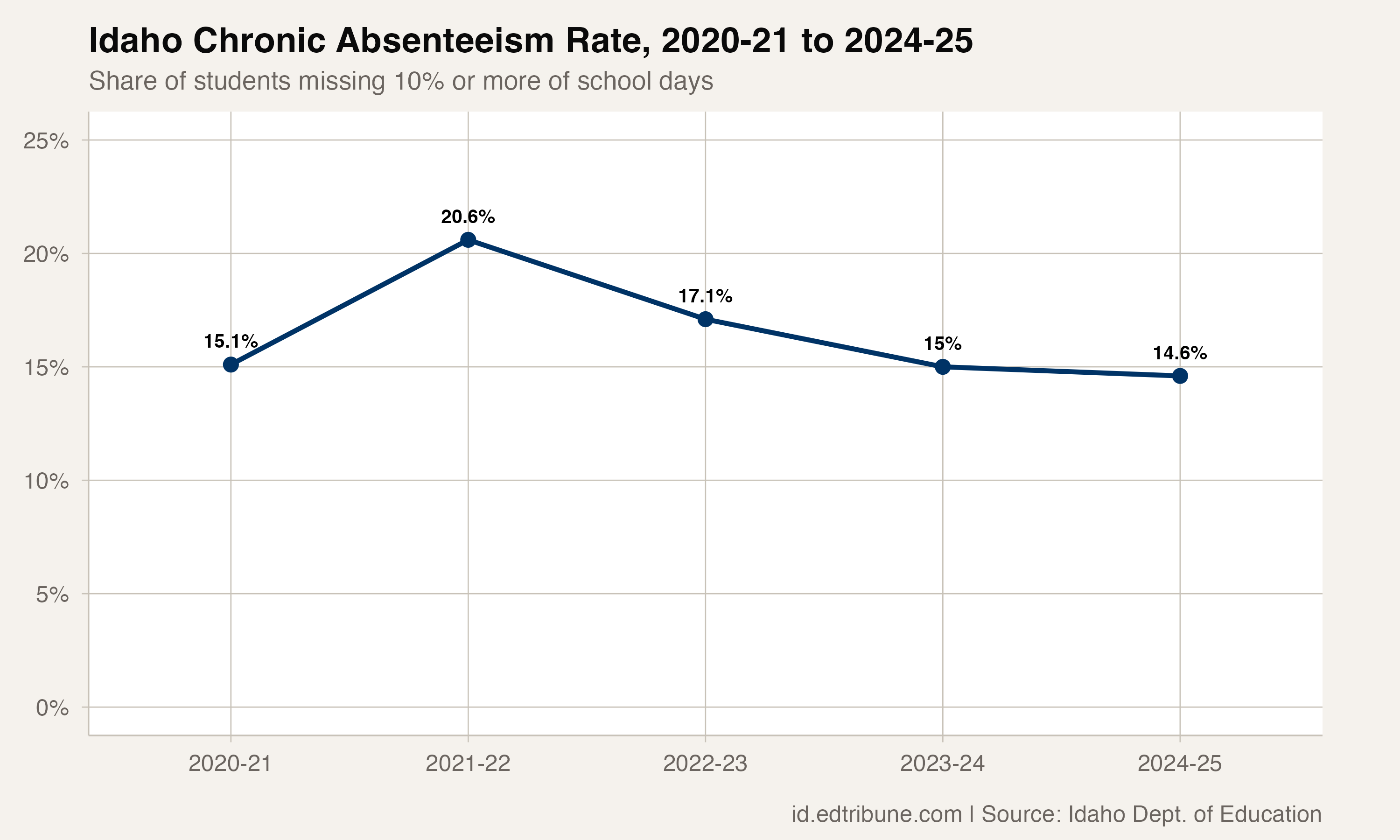
The numbers told a recovery story for two years. Idaho's chronic absenteeism rate fell from its pandemic peak of 20.6% in 2021-22 to 17.1%, then 15.0%, steep, reassuring drops that suggested the attendance crisis was resolving itself.
Then the floor went soft.
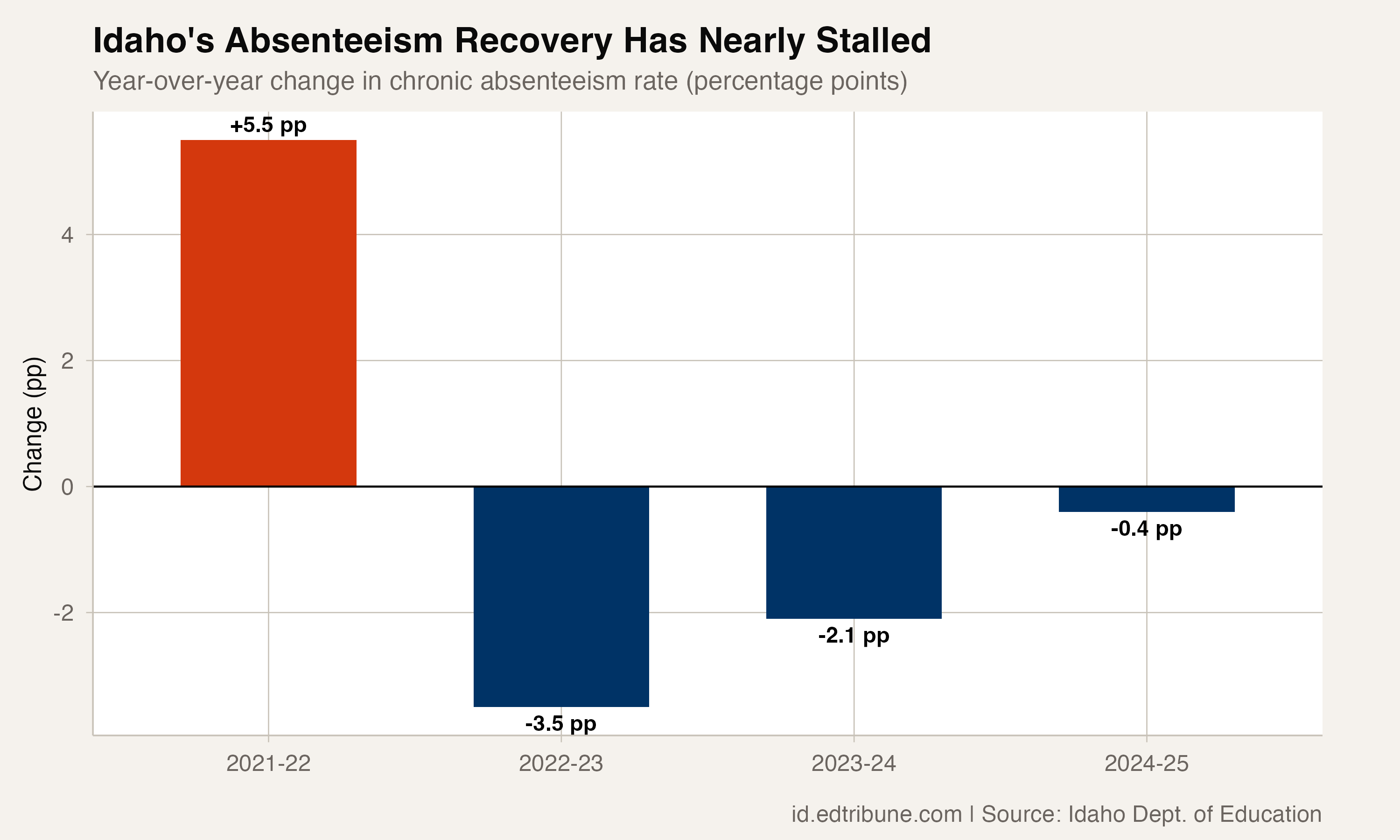
In 2024-25, Idaho's rate fell just 0.4 percentage points, to 14.6%. That deceleration (from a 3.5-point improvement to a 2.1-point improvement to barely any movement at all) is the pattern that should concern state leaders more than the rate itself. The state still has 44,640 students missing at least 10% of school days, and the trajectory suggests this number may not shrink much further without new intervention.
The deceleration is the story
Idaho's 14.6% rate looks modest compared to states like Oregon (33%) or New Mexico (30%+). State Superintendent Debbie Critchfield has pointed to Idaho's emphasis on in-person learning during the pandemic as a factor in the state's relatively lower rates.
But the year-over-year trajectory undermines the optimism. The improvement from 2022 to 2023 was dramatic: 3.5 percentage points, representing roughly 10,700 fewer chronically absent students. The next year delivered 2.1 points. In 2024-25, the gain was 0.4 points, equivalent to about 1,600 fewer students. At this pace, Idaho would need more than a decade to reach 10%, a threshold many attendance researchers consider healthy.
The pattern is not unique to Idaho. National data from Attendance Works shows similar deceleration across many states as the "easy" post-pandemic recovery gains run out and harder structural barriers remain.
Nearly half of districts are going the wrong direction
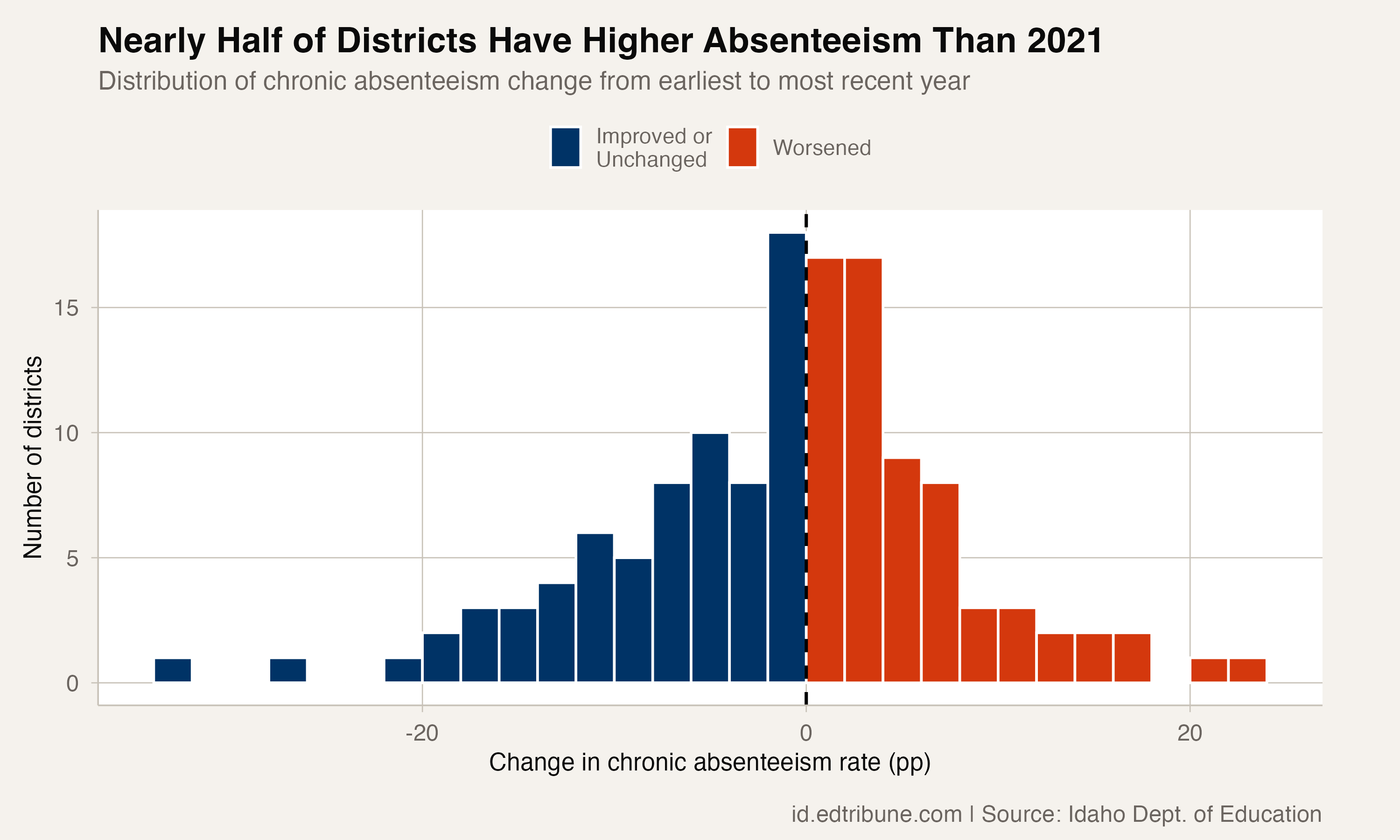
The state average obscures a deeper split. Of 135 districts with multi-year data, 65 (48.1%) have higher chronic absenteeism now than when data collection began in 2020-21. That baseline was itself a COVID-affected year, making these increases especially troubling.
The worsened list includes some of the state's largest districts. Mountain Home↗ET jumped 13.7 percentage points, to 24.9%. Coeur d'Alene↗ET rose 7.4 points, to 20.7%. Moscow↗ET nearly doubled, from 8.6% to 16.1%. Boise↗ET, the state's largest district with 21,623 students, sits at 21.0%, three points above its 2021 level.
Who recovered, who didn't
The subgroup data reveals a sharp divide. Native American students, Idaho's most-improved group, dropped 11.5 percentage points, from 32.8% to 21.3%. Black students improved by 6.2 points. Students who are homeless, despite still facing a 30.6% rate, improved by 5.7 points from their 2021 level.
But students in foster care moved in the opposite direction: their rate rose from 24.2% to 27.1%, making them the only student group where chronic absenteeism is still climbing. White students, who make up 72% of Idaho's enrollment, barely budged, down just 0.1 points to 12.9%.
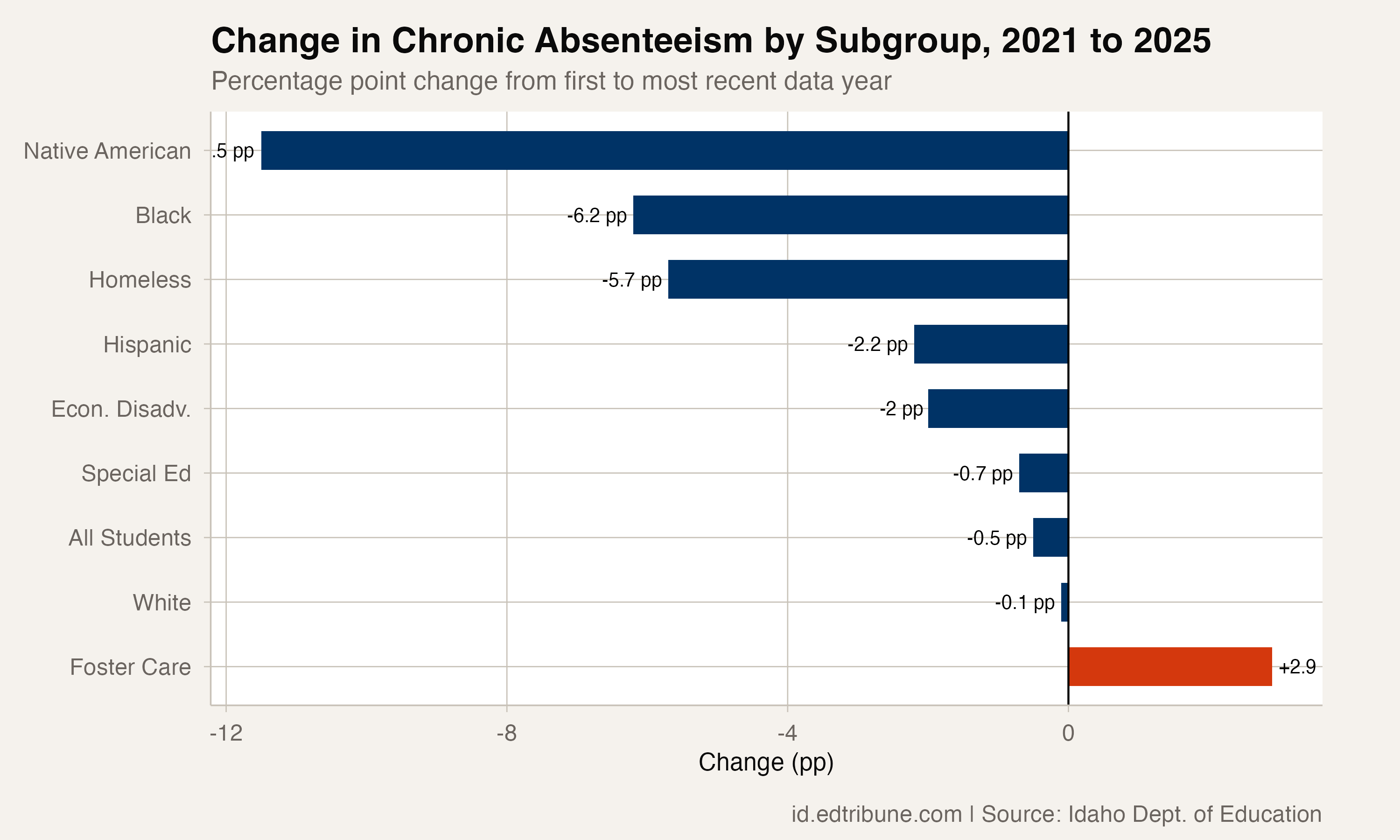
The pattern suggests the easiest gains came from the groups with the highest rates and the most obvious pandemic-related disruptions. The remaining 14.6% reflects attendance barriers that predate COVID and resist the kind of broad-based interventions (return-to-school campaigns, attendance awareness weeks) that drove the initial recovery.
What the plateau means
Idaho funds schools based on Average Daily Attendance, meaning each absent day costs districts approximately $45 per student. With 44,640 students chronically absent, each missing at least 18 days per year, the cumulative cost runs into the tens of millions in lost state funding, separate from the academic consequences.
The state has no statewide attendance intervention program comparable to those in Connecticut or Oregon. Individual districts have launched campaigns. Caldwell↗ET ran an "Every Day Matters" initiative. Boise has partnered with community organizations. The results have been uneven.
The deceleration from 3.5 points of improvement to 0.4 points suggests that whatever was working has largely run its course. Idaho has not yet decided whether 14.6% is the new normal or a plateau worth fighting through.
Detailed code that reproduces the analysis and figures in this article is available exclusively to EdTribune subscribers.
Discussion
Sign in to join the discussion.
Loading comments...